.png)
Altering Perceptions of Misinformation Prevalence
.png)
event
Extensive attention has been paid to misinformation, with the public, press, and policymakers alike expressing concerns about its prevalence and effects. Despite the intense public concern, research repeatedly documents that misinformation constitutes a small fraction of people's actual media diets. Unsurprisingly, given the attention to the phenomenon, people substantially overestimate its prevalence, and past research has shown that misperceptions of misinformation prevalence correlate with negative attitudes such as cynicism and media mistrust. In two pre-registered experiments, I, with co-authors Ceren Budak, Harim Lee, and Ralph Anderson, tested whether prevalence beliefs can be corrected and whether such corrections also affect people's political attitudes, news trust, and ability to identify accurate and false news. In the first experiment, we partnered with local news organizations in five states to run an audience engagement initiative focused on reporting suspected misinformation. Within each state, we randomly assigned study participants to either track misinformation or engage in a control tracking activity. Over three weeks, participants who tracked misinformation developed more calibrated estimates of misinformation exposure and greater news trust than controls (n = 646 at the first post-wave survey). A second online experiment (n = 2,002) tested lighter-touch alternatives, such as a short social media audit and exposure to a corrective article describing research on misinformation prevalence and effects, against control and alarmist conditions. We find that the media audit and corrective article again calibrate assessments of misinformation prevalence. Corrective article exposure also reduces misinformation concern and, among Democrats, reduces support for policies to restrict misinformation. Our study shows that misperceptions of misinformation prevalence can be corrected and can affect other consequential attitudes.
The Misinformation Speaker Series is co-sponsored by the Shorenstein Center for Media, Politics and Public Policy at Harvard’s Kennedy School and the Institute for Information, the Internet, and Democracy (IIID) at Northeastern University.
speaker
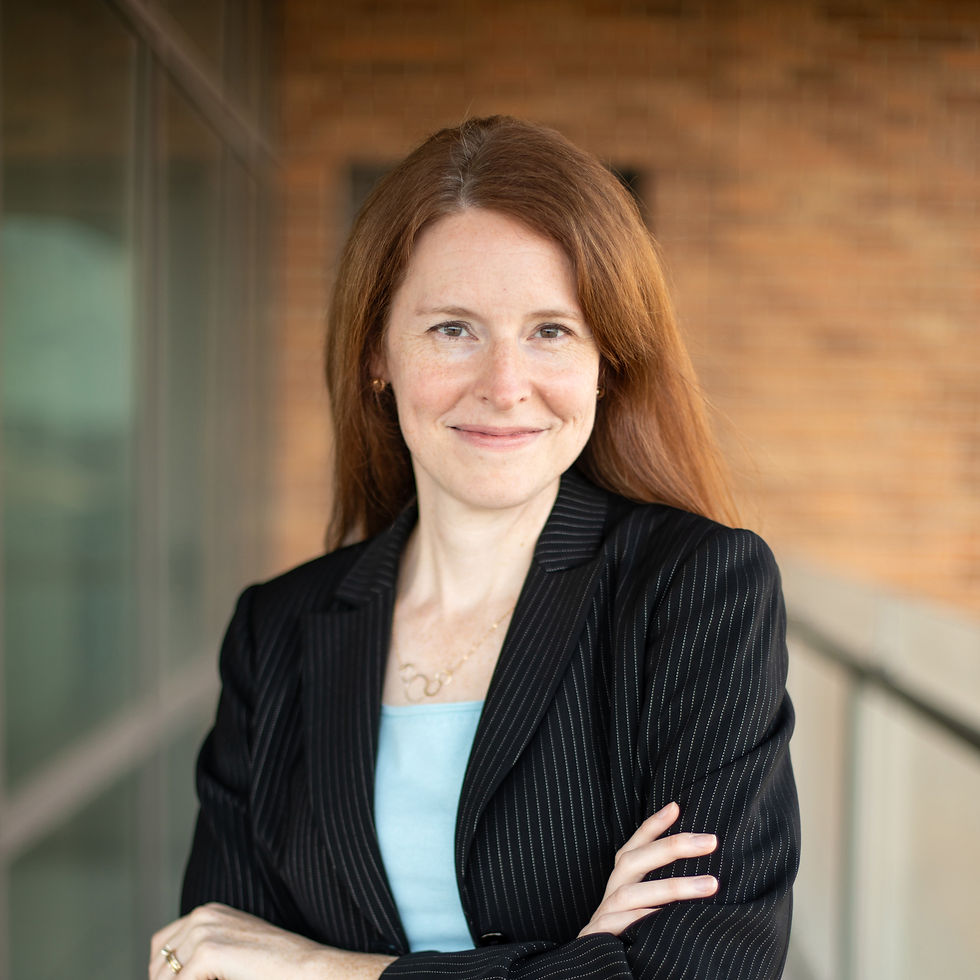
Talia Stroud
University of Texas at Austin — Center for Media Engagement
Natalie (Talia) Jomini Stroud holds the E. M. “Ted” Dealey Professorship in the Business of Journalism and is a Professor in the Department of Communication Studies and the School of Journalism and Media, as well as the founding and current Director of the Center for Media Engagement (mediaengagement.org) at The University of Texas at Austin. Stroud is a Fellow of the International Communication Association and the Annenberg Public Policy Center. She is part of an initiative to re-envision digital public life (newpublic.org) and a co-academic lead on the U.S. 2020 Facebook & Instagram Election Study. Stroud's research on the media's role in a democracy has received numerous awards, including the International Communication Association's prestigious Outstanding Book Award for her book Niche News: The Politics of News Choice.
related work

APSA Pre-Conference Event:
The Politics of AI
September 2, 2026 | 8:30 am - 5:30 pm EST
|
September 2, 2026 | 8:30 am - 5:30 pm EST
-
September 2, 2026 | 8:30 am - 5:30 pm EST
EST
In-Person

APSA Pre-Conference Event:
The Politics of AI
September 2, 2026 | 8:30 am - 5:30 pm EST
|
September 2, 2026 | 8:30 am - 5:30 pm EST
-
September 2, 2026 | 8:30 am - 5:30 pm EST
EST
In-Person
APSA Pre-Conference Event:
The Politics of AI
September 2, 2026 | 8:30 am - 5:30 pm EST
|
September 2, 2026 | 8:30 am - 5:30 pm EST
-
September 2, 2026 | 8:30 am - 5:30 pm EST
EST
In-Person